Still hard at work, and enjoying every minute of it.
–rakkity
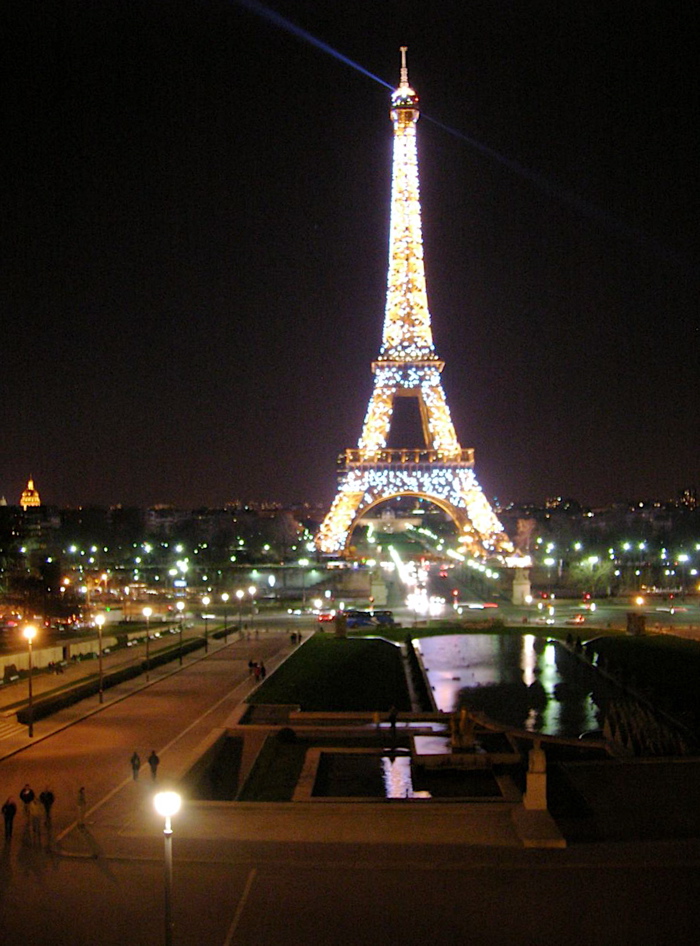
View of the Eiffel Tower from Trocadero.
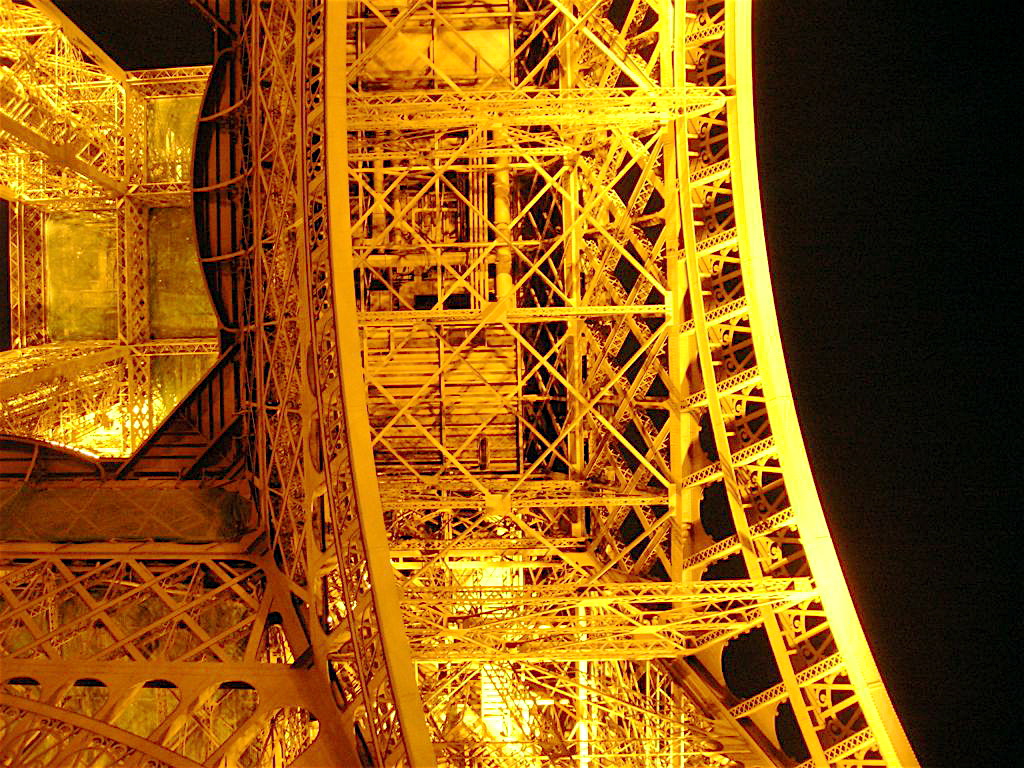
E.T from under

Art Deco Brasserie at Saint Michel
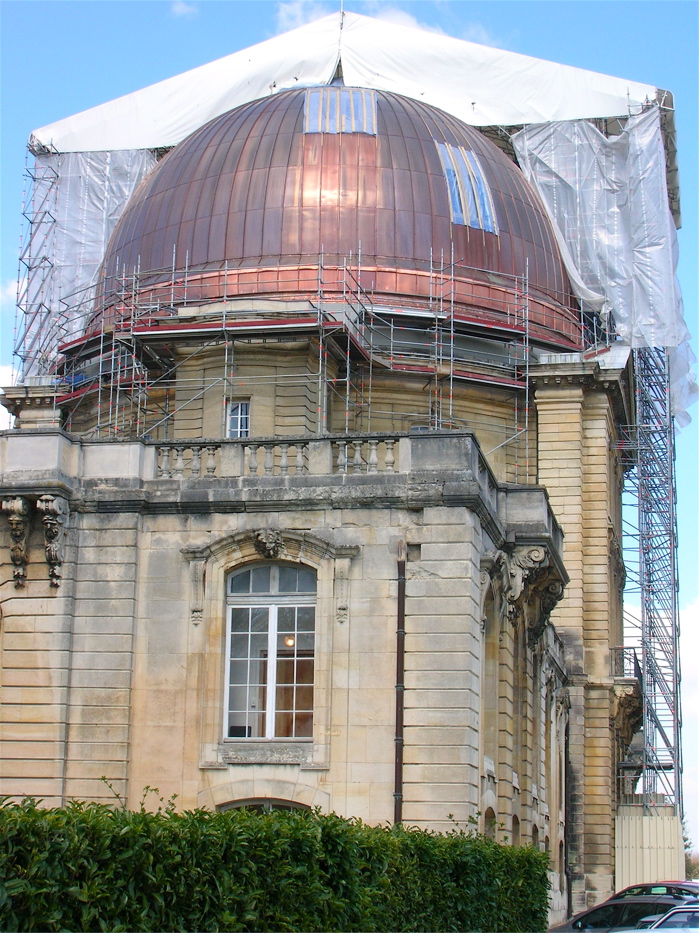
Our meeting location–an observatoire of the 18th c.
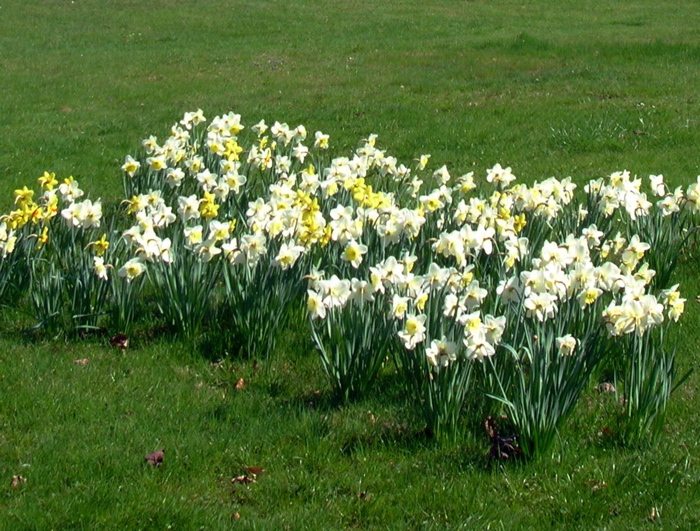
April daffodils outside the cafeteria.
Still hard at work, and enjoying every minute of it.
–rakkity
View of the Eiffel Tower from Trocadero.
E.T from under
Art Deco Brasserie at Saint Michel
Our meeting location–an observatoire of the 18th c.
April daffodils outside the cafeteria.
Mike,
I looked for strikes & demonstations on a walk near the Obs de Paris this afternoon, but within a mile radius, saw only passive Parisians, blooming forsythias and rampant daffodils. Dang. And I brought my camera along to get some interesting shots. Maybe I’ll head over to the Place du Republique this evening.
–rakkity
4 Avril 2006 on continue
Greve et manifestations
il est vital que tous nous soyons encore plu
nombreux
Pour dire NON
Pour exiger le RETRAI pur et simple du CPE, du CNE, du Contrat senior
Le mardi 4 Avril
Tour dans la greve et les Manifestations
A Paris: Depart Place de la Republique a 14 H 30
Mike,
I looked for strikes & demonstations on a walk near the Obs de Paris this afternoon, but within a mile radius, saw only passive Parisians, blooming forsythias and rampant daffodils. Dang. And I brought my camera along to get some interesting shots. Maybe I’ll head over to the Place du Republique this evening.
–rakkity
4 Avril 2006 on continue
Greve et manifestations
il est vital que tous nous soyons encore plu
nombreux
Pour dire NON
Pour exiger le RETRAI pur et simple du CPE, du CNE, du Contrat senior
Le mardi 4 Avril
Tour dans la greve et les Manifestations
A Paris: Depart Place de la Republique a 14 H 30
…â€I’ve got a rope.â€
Bob and I peered down the face with Jack. We couldn’t see very far, since the walls of the cleft blocked the view of the lower cliffs. Jack continued, “Below that chimney, from what I’ve heard we’ll have to rappel.†That perked up my ears. I’d never rappelled before. Jack uncoiled his rope and showed us how you wrapped it around your leg, your waist and your shoulder. And then he pulled out some nylon webbing from his backpack, which he helped Bob and me tie around our waists.
One of the other hikers came over and asked us what we were planning. Jack told him. He introduced himself as Bill, and said that he’d climbed a little bit before, and would like to join us. He had even rappelled a couple of times before and had a waist sling of his own. So we welcomed him to the team.
After some fiddling with our knots, our boots and our packs, Jack led the way down the tumbled boulders of the cleft. Soon we were within a chimney four or five feet wide, and we descended with hands and feet pressing against the sides. The walls were blocky and full of solid footholds and handholds, so we didn’t feel the need to rope up yet. As we down-climbed together, we could see the slope steepening.
Jack told us that it was time to rappel. He tied a piece of webbing around a large projecting rock, and fed the rope through the loop. Bill, the other experienced rappeler, descended first. The route was not vertical, but it would have been hard to climb. (The guide books call this Kiener’s Route, and it’s rated 5.4, which would have been at the top end of my ability to climb at that time.) Bill shouted up that he was at the end of the rappel, and Bob descended. Shortly I followed. The rope slid smoothly and slowly around my body, just as it was supposed to, and soon I was on a ledge looking up at Jack. He rappelled quickly down, and with two of us tugging on one end, the rope came down from above. Now we were committed. There was no going back.
The rest of our descent on the rocks was relatively uneventful. Now and then we could see the vast vertical space of the Diamond off to the left, and further down we could see a wide snow-covered ledge crossing the slope below us. “That’s Broadwayâ€, said Jack. Clambering downward, we eventually reached Broadway. It extended off horizontally to the Diamond on the left and to a snowy couloir on the right. After easy rock hopping along the broad ledge, we gained the couloir, and looking up to the right and down to the left, we saw it was a long snow gully that ran up to the right about 500’ up near Long’s Notch, and down to the left about 1000’ to the canyon floor just at the top end of Chasm Lake. For the first time we could see the the end of our route. Jack told us that we should rope up here, and he helped us each tie into the rope, Bill at one end, himself at the other, and Bob and I about 40’ apart in the middle. Jack stepped out onto the snow slope, and showed us how to “plunge step†in the snow.
Unknown to us, this was the infamous Lamb’s Slide, and many a climber has been injured or killed in an uncontrolled descent. The snow comes to a sudden end on the rocks at the bottom, and you can gain quite a bit of speed before colliding with the boulders at the end of the snow. The conditions of the snow itself were excellent for climbing. The snow was solid, but not icy, and an experienced snow climber would have had no problem. But we were snow lambs, innocents ready to be slaughtered at the end of the slide.
At first we progressed carefully and steadily. Bill or Jack would descend first, while the rest of us stood still, and then, one at a time, the other three would descend. But no one had an ice axe, and a slip by any one of us could pull the next person on the rope off his stance, which is exactly what happened. I can’t recall who slipped first, but a chain reaction quickly followed. Soon all four of us were sliding, butts on the snow, hands and feet digging for purchase. When one of us managed to stop he was quickly pulled off his feet. Pretty soon Bob and I were tumbling head over heels. Bob somehow had gotten the rope wrapped around him. Jack and Bill may have had a more controlled descent, but I couldn’t tell. We accelerated towards the rocks with no way to slow down. The slope suddenly flattened a bit, and I was able to get onto my stomach and press my hands into the snow ahead. Bob was completely out of control, and flew into the boulder field head first. As the snow ended, my extended hands abruptly stopped, and I somersaulted over onto my back.
We lay there on the rocks for a minute, and then Jack groaned, “I think I’ve broken my hipâ€. Bill also groaned, “My arm’s broken.†I checked my extremities, and found only bruises and cuts on my hands. But there was no sound from Bob. He was lying motionless on his back. We crawled over to him. His jaw was bloody, and he was blinking his eyes like he was trying to wake up. He reached his hand to his jaw, and opened his mouth. His teeth were badly broken. He muttered something incoherent about his dentures. We tried to get him comfortable, and discussed what to do. Bill volunteered to run down for help. We gave him Bob’s home phone number to call his wife. Then we watched him jog down the Chasm Lake trail towards help.
A couple of hours later, two search-and-rescue rangers came up the trail. While one assessed Bob’s damages, the other fired up a stove and made some hot soup for him. Jack had long since found that his hip was only bruised, and he could walk. By that time, Bob had regained his senses and mobility. One of the rangers gave him a walking stick, and he was able to walk out with us to the trail head. We were met at the parking lot by Bob’s wife and Bill. She hugged her old husband (he really did look old now), and looked at the rest of us disdainfully. Bob got into his car with her and waved goodbye.
Bill told us that his arm was only sprained, so of the four of us, by some miracle, only Bob had really been injured. Jack, Bill and I shook hands, and departed. I never saw them again.
• rakkity
It was July, 1965, and I had just moved to mountainous Colorado from flat Illinois. Just about everything I owned was in my car, and I was camping my way though the mountains, postponing the day when I’d join the CU graduate school in Boulder. This particular day I had my eye set on Mt Ida, a “12-er†on the high ridge in Rocky Mtn National Park. It was an easy walk up to the 11,000’ plateau behind Ida, and a short “walk in the park†to the summit.
Someplace along the trail, I met a retired guy, Bob, who was walking back to his car. Bob asked me where I was planning to hike next, and not having any plan, I asked for suggestions. He said that he and a younger friend, Jack, were going to climb Longs Peak the next day, and I was welcome to come along. He invited me to his trailer in the neighboring town of Estes Park, where, since his retirement a few years ago, he and his wife moved up to from Phoenix every spring. They made dinner and shared it with me, while we all raved about the beauty of the Park. Afterwards, I left for the campground, with an agreement to meet Bob & Jack at dawn at the eastern trail head to Longs Peak.
The sun was rising behind Twin Peaks just east of the Longs Peak trail when I drove into the shadowy parking lot. There was Bob, and a younger guy about my age (24) with a rope over his shoulder. Bob introduced me, and we checked the contents of our packs (cheese, bread, candy bars and water, mostly) and hit the trail. It was a 3,000’ gain up to the plateau known as the Boulder Field, just north of Long’s summit. There was some snow in the shaded areas, but not enough to slow us down, though the north face of the peak seemed to be a plastered with rime. By then the sun was up high, and it compensated for the coolness of the altitude (12,700’). Above us, to the right of the summit, we could see the “Keyhole” formation through which the summit trail wound.
After a lot of boulder hopping and scrambling along the semi-circling trail, we found ourselves on the ramps approaching the south side of the summit—“The Trough†and “The Narrowsâ€. This was the first place we experienced serious exposure, and it is often the bane of the flat-landers. I had climbed few mountains before, but for some reason the exposure didn’t affect me. Maybe the air’s lower oxygen content had reduced the number of my functioning brain cells to 3 or 4— as evidenced by later insane decisions. The slope drops off below the trail in long pinkish-grey slabs that disappear into Wild Basin. Apparently the exposure didn’t faze Bob or Jack, who scrambled up “The Home Stretch†to the summit, with me in their wake.
The top of Longs is flat, and about as big as a baseball field. If you batted a baseball from that 14,256’-high field, it would drop 3 or 4 thousand feet in most any direction. From the pitcher’s mound you can see all of the National Park, Colorado’s Front Range all the way down to Pike’s Peak, and the mountains of the Continental Divide to the west. It was a marvelous view, and we sat down and ate lunch while we tried to identify those peaks around us.
Other climbers who had just summited were also enjoying the scenery and their lunches, or were snoozing, but Jack walked over to the east side of the summit and looked down over Long’s East Face. We trundled over to look with him, and so did some other hiker/climbers. He pointed down towards a cleft through which we could see Chasm Lake, a tarn in the canyon some 3,000’ below us.
He casually said, “You know, I think we could descend this way to Chasm Lake. And I’ve got a rope.â€
(to be continued)
• rakkity
It was July, 1965, and I had just moved to mountainous Colorado from flat Illinois. Just about everything I owned was in my car, and I was camping my way though the mountains, postponing the day when I’d join the CU graduate school in Boulder. This particular day I had my eye set on Mt Ida, a “12-er†on the high ridge in Rocky Mtn National Park. It was an easy walk up to the 11,000’ plateau behind Ida, and a short “walk in the park†to the summit.
Someplace along the trail, I met a retired guy, Bob, who was walking back to his car. Bob asked me where I was planning to hike next, and not having any plan, I asked for suggestions. He said that he and a younger friend, Jack, were going to climb Longs Peak the next day, and I was welcome to come along. He invited me to his trailer in the neighboring town of Estes Park, where, since his retirement a few years ago, he and his wife moved up to from Phoenix every spring. They made dinner and shared it with me, while we all raved about the beauty of the Park. Afterwards, I left for the campground, with an agreement to meet Bob & Jack at dawn at the eastern trail head to Longs Peak.
The sun was rising behind Twin Peaks just east of the Longs Peak trail when I drove into the shadowy parking lot. There was Bob, and a younger guy about my age (24) with a rope over his shoulder. Bob introduced me, and we checked the contents of our packs (cheese, bread, candy bars and water, mostly) and hit the trail. It was a 3,000’ gain up to the plateau known as the Boulder Field, just north of Long’s summit. There was some snow in the shaded areas, but not enough to slow us down, though the north face of the peak seemed to be a plastered with rime. By then the sun was up high, and it compensated for the coolness of the altitude (12,700’). Above us, to the right of the summit, we could see the “Keyhole” formation through which the summit trail wound.
After a lot of boulder hopping and scrambling along the semi-circling trail, we found ourselves on the ramps approaching the south side of the summit—“The Trough†and “The Narrowsâ€. This was the first place we experienced serious exposure, and it is often the bane of the flat-landers. I had climbed few mountains before, but for some reason the exposure didn’t affect me. Maybe the air’s lower oxygen content had reduced the number of my functioning brain cells to 3 or 4— as evidenced by later insane decisions. The slope drops off below the trail in long pinkish-grey slabs that disappear into Wild Basin. Apparently the exposure didn’t faze Bob or Jack, who scrambled up “The Home Stretch†to the summit, with me in their wake.
The top of Longs is flat, and about as big as a baseball field. If you batted a baseball from that 14,256’-high field, it would drop 3 or 4 thousand feet in most any direction. From the pitcher’s mound you can see all of the National Park, Colorado’s Front Range all the way down to Pike’s Peak, and the mountains of the Continental Divide to the west. It was a marvelous view, and we sat down and ate lunch while we tried to identify those peaks around us.
Other climbers who had just summited were also enjoying the scenery and their lunches, or were snoozing, but Jack walked over to the east side of the summit and looked down over Long’s East Face. We trundled over to look with him, and so did some other hiker/climbers. He pointed down towards a cleft through which we could see Chasm Lake, a tarn in the canyon some 3,000’ below us.
He casually said, “You know, I think we could descend this way to Chasm Lake. And I’ve got a rope.â€
(to be continued)
• rakkity
–rakkity
It was a beautiful Spring day in Boulder, and Maggie and I were in high spirits as we headed up the Bluebell trail toward the Third Flatiron. Maggie Herz was a grad student in the Physics Dept, I was a 2nd-year grad student in the Astrogeophysics Dept, and both of us were hiker/climbers in the CU hiking club. I had my 50-m rope, and she had hers. We needed two of them because we planned to do the famous 50-m (165-ft) free rappel off the high point of the 3rd Flatiron down into Poison Ivy Gully. Each of us had been up on top there before, but neither of us had rappelled off the 50-m cliff. When I had done the Flatiron climb the year before, it was with one of my teachers, who showed me how to do a body rappel off the back side of the Flatiron, where the drop was only 25 m, so it could be done with a single rope. The body rappel had been invented at least 6 or 7 decades before, and it was still being done even now in the enlightened age of 1967 because braking carabiners hadn’t been invented yet (or at least Yvonne Chouinard’s Ironworks factory wasn’t supplying the stores). But the ever-inventive Rocky Mtn Rescue folks who hung out with the CU Hiking club had invented a system of 3 carabiners that worked fine as a rappel brake–so long as you put them together correctly. continue

(click)
Our first crocus. No cardboard, no Photoshop, no fakery. Just plain shadows and sunlight.
–rakkity

(click)
Bathroom at the Pomegranate Inn. Photoshop > adjust levels, contrast, color and sharpen, then add a wee bit of yellow to resemble the original.
Michael
Last Tuesday, Dominic sent an email to me asking if I was up for racquetball Wed or Thurs night. I almost responded with a “Yes” when I recalled that Patrick had asked to play on Thurs. And it wouldn’t be a 3-way game, because KT was busy with a Dutch class that afternoon. So with the gauntlet of a father-son game facing me, I turned the Dom down, and suggested Saturday as a possibility.
The Dominator game postponed, I girded my loins for Thursday’s game. Patrick showed up right on time, and after about 10 minutes of chatting, we got down to work. P. scored first, and then the adrenaline started churning, and I pulled ahead. There were many opportunities for kills, but instead of smashing the ball into a strip 6 inches above the bottom of the front wall, I systematically made my returns to the rear corners. I do so love to watch P. make those impossible leaps and back-handed smashes at the corner balls. He is almost always successful in returning them, but he can’t kill from the corners, so when his ball comes down from the front wall, I just lob another return into the opposite corner, from which he makes another incredible return.
So that’s why our games go on so long. After half an hour of one corner lob after another, I won, and we went into the 2nd game. (With Dominic, it’d be the 3rd or 4th game. The Dom doesn’t mess around. It’s one kill or miss-kill after another.) We were panting heavily in the 2nd game, and I was up 11-5, when Katie appeared. After an excess of unpronounceable Dutch words, the teacher quit early. Aha! It’s a reprieve for all of us.
P and I both switched to left hands. The 3 of us played for 20 minutes, and had a great, relaxing game, which KT won. At 6 pm sharp, the 2nd game went into sudden death at 10-10-10. My serve, and it happened to hit a floor-wall corner and die. So I pulled that one out, just by accident.
It’s Friday now, and I’m wondering if the Dominator has had some practice with his other partner. I can’t rely on him going into our once-a-week games without an intermediate game anymore. He gets a chance to polish his serves and kills without me watching. But then, I get a similar chance, too. So our games may be interesting. Stay tuned.
–rakkity
It was July 1975, and the three of us, Joe, Chuck, and Ed (your 6-lived reporter), were bound for Scott Lake, a high alpine tarn just west of Gannett Peak, the highest mountain in Wyoming. We had no intent of attempting Gannett–this was just an exploratory trip to see the high glaciated basins and alpine meadows of the Wind River Mountains. We’d been in the Winds twice before, and hiking here was becoming an annual ritual.
The approach to Scott Lake is via Twin Lakes, two long blue gems bordered by thick forests of pine, aspen and fir. The slope of the trail was gradual and pleasant, and we had wonderful views of spectacular Squaretop, with its castle-like buttresses that descended perpendicularly thousands of feet almost to lake level.
After about 9 miles of hiking the well-traveled trail, we turned off onto a poorly maintained path that headed up Scott Creek. We camped at timberline, and looked at the prospects for tomorrow. Scott Creek descends through a rock-strewn chasm in the cliffs bordering the canyon we had hiked up. Scott Lake above lies 2000′ up in a classic “hanging valley” cut over eons by creek runoffs since the geological epochs during which the glaciers carved the lower valley.
We were tired from the long hike in with 50-60 pound backpacks, and after dinner, we slept the sleep of the weary and the clueless. The next morning, after an energizing breakfast of oatmeal and bacon, we headed up into Scott Creek chasm. The path that had been faint was now non-existent, and we had to find our way through a chaos of boulders that ranged in size from suitcase to VW Beetle. Those boulders were the remnants of an ongoing battle between relative stability and winter/spring floods. What we were hiking on was a temporary respite in the yearly rock avalanche that pours down from Scott basin during the snow avalanches and the great melt-off every May and June.
As we ascended, the slope became steeper, and burdened as we were with full packs, we had to zig-zag up the slope, finding routes on and among the boulders. We first ascended to the left and then to the right, and back again, moving generally upwards. After a couple of hours of this, as the chasm steepened, we found ourselves actually climbing. We had moved from the “3rd-class” (hands-free) zone to “4th class”, meaning we had to use our hands for balance. In other circumstances we would have roped up, because a fall would have caused some injury, but probably nothing fatal. The greater danger was knocking a rock down on a partner’s head, and with a rope, that would have been more likely than not. So we stayed close together as we climbed. If one of us dislodged a small boulder, it wouldn’t gain great momentum before endangering the climber below, and he could dodge out of the way. What we didn’t expect was that rocks could dislodge themselves without human intervention.
We were at the crux of the climb now. The route seemed to get shallower up above but it was at its steepest now. Chuck and I were together, moving crosswise along a ledge. Joe was off to the right somewhere. Suddenly there was a rumble from above. I saw a coffin-sized boulder falling towards me. I jumped sideways quite instinctively. There was no possibility of planning foot and hand moves on the ledge. The boulder brushed by me, exactly where I had been. (Chuck reached out and pushed at the boulder as it fell. This is from his description of the event later. I have no recollection of it myself.) The boulder continued to fall freely below me as I moved and it made a great whoosh, followed by a booming crash as it hit the boulders below us. The sound echoed in the canyon for a few seconds. There were the usual small rock avalanches afterwards, but nothing more fell from above.
Chuck and I shook our heads as we looked at each other wordlessly. Joe called over, “Are you guys all right?” We affirmed that we were, and without any discussion, we continued on upwards. We agreed implicitly that it would have been more dangerous to descend, and the way up seemed to be getting easier. Trying not to think about the precarious stability of the boulder chasm around us, we continued up to the relative shelter of the cliffs above without incident.
When we reached the top of the rock field, we entered a wide cleft in the cliffs. The creek now ran nearly horizontally, and we followed it through the cleft to where it flowed out of Scott Lake. The basin opened up to us. We had reached our objective. The color of the lake water was a milky green pastel, caused by glacier “flour” in the water. The grey faces of Gannett Peak and the pristine white slopes of Gannett Glacier shimmered and refracted in it, making a dreamy inverted image of the basin. We settled on a patch of lovely alpine
meadow, threw down our packs, and breathed deeply of the thin mountain air. We had brushed against death to get here, and we would savor the beauty of the cirque for two more days. The route out (thank you, Odin). would be on a safer route than we had struggled up. Time to enjoy life and recuperate in one of Nature’s grandest places.
–rakkity
Last week I sent an email to Dom saying “game Wed night?” He responded, “I’m in the UK, how about next Wed?”
So next Wednesday came, and the Dom & I met at the court. When I pulled the ball (our only ball) out of my pocket, I looked at it and exclaimed,”Wow! I thought I had gotten rid of this one!” The ball was green (meaning bouncy) and speckled with grey sticky spots. At one time we had played on a newly varnished court, and this ball had found all the places where the varnish hadn’t dried. It was therefore able to generate marvelous spin, and reflected at odd angles that would have made Snell frown. (Snell was a 17th C billiards player who developed “Snell’s law” of reflection.) Out of exasperation, we had given this ball up long ago, but here it was again.
I made a few hits with it, and saw that it had lost none of its magic. But the Dom was impatient. “Let’s not fool around practicing, let’s just start.” After the regulation Bounce to the Centerline playoff, which I won, I served into the left corner. The ball spun off the side wall, hit the back, and virtually rolled along the back wall instead of bouncing. I chuckled as the Dom swung futilely. This went on for 6 more serves, when finally, the Dom got the serve. He hadn’t mastered the art of playing speckle ball, however, and I got the serve back, and went on violating Snell’s laws for seven more serves before he got a point. I won that game 15-1, and the Dom was sweating.
He hunkered down and mastered the speckle serve, but by then I was getting used to the impossible reflections. We were tied at 12-12 when I threw in some Z shots that the speckle ball used to crawl magnetically along the sidewall. Dom was finished.
We rested for several minutes and went on to play two more games. But The Dominator could no longer dominate. The speckle ball beat him in two more games.
Afterwards, Dom pointed to his belly, and said,”No matter how many situps I do, this belly is still growing. I’m thinking of going for lipo. They say that after lipsuction, your belly fat never comes back.”. Well, maybe he’ll do it, and maybe he won’t. But if he does, I’ll look back and think it was because of my anti-Snell ball.
–rakkity
Patrick and I met at the gym entrance for our 5-oclock game on the dot of 4:59, and were tapping on the glass of court no. 1 at 5:02. The couple who were playing there couldn’t be serious players, after all, it was a boy-girl match, which couldn’t be as important as a father-son tournament, could it? They gave up the court gracefully (more gracefully than we had at the end of our unfinished sudden-death match last week).
Patrick scored the first point, and my adrenaline levels notched up a tad, but I got the serve back with a modest kill shot. As I racked up a few points, I relaxed my serves a little, and Patrick got the ball back. He scored 2 more points with wall grazers, and I got more serious, and returned his serve with a wall grazer on the wall opposite to his position. If I had been given that shot, I wouldn’t have even tried, but with his impressive speed, Patrick dove for it. The ball hit the corner and bounced back along the wall without a millimeter of air between rubber and plaster. Patrick gave it a terrific smash, but the ball just blooped towards the front wall, missing it by a yard, and he lost the serve. From that point on, it was all downhill for him.
So after winning the continued sudden-death game 15-10, I went on for the kill in the next game. Patrick served and scored twice. I was already behind 2-0, and the adrenaline surged. I began with a series of alternating shots to the left and right corners. We volleyed about a dozen times, with Patrick steaming to the right wall to return, steaming to the left wall, then the right, then the left. On and on, he returned shots that I would have missed 2 out of 3 times. I could have made a kill, but I wanted to see if he would tire. Impossible. He was sweating a little, but moving just as fast after 10 minutes of sprinting, swinging, reversing, sprinting, swinging,.. I ended the game with a final kill to the depths of the lower right corner. Patrick dove for it, as he always does, but to no avail.
So Patrick was down 0-2 after losing 10-15 and 12-15. I was getting a little tired myself, but P was as sprightly and eager as at the beginning. He served first, and scored twice, as in the 2nd game. This game I was determined to think of new shots that he might not even attempt to return, but it was hard to do that. Two passing players outside the glass stopped to watch his patented back-hand reverse bounces off the glass. No one I’ve ever seen can do that back-hand reverse as well. But a couple of serves later, I got balls deep into the left corner, and his back-hand reverse bounced off his chest—one of his few failures.
For my first several points, I was bearing down hard on my serves, but after getting a margin of 5 points, I relaxed and made easy serves. Patrick surged on, and was within two points, so I bore down again, restoring my 5-point lead. Then I relaxed, serving to Patrick’s right hand, and he picked up 3 points. My right arm was sore, but I went back to the old reliable underarm left-corner smash. Surprise, surprise. I found that I could return a few shots over P’s head, high enough that he couldn’t reach them, and crept ahead to 14-8. Then Patrick gained 3 straight points on front kills that I didn’t bother to chase, and I began to worry. Regaining the serve, and, panting, I banged one that even The Dominator wouldn’t have returned, but P blooped it to the front. I was so surprised that I didn’t even go for the ball, and P had the serve again. Then he scored twice, and was within one point of tying. After regaining the serve when P swung wildly and missed an easy shot, I changed tactics. I served a Z-shot, which Patrick fielded easily, but I moved into a position for a Dominator front-z shot that ended up moving parallel to the front wall, grazing it gently. P. dove to the front for the ball, returning it, but left himself vulnerable to my return that came off the front wall behind him, and headed towards the back glass just two feet off the floor. P sprinted and dove, but he was 10 milliseconds late. So I won 15-14.
It was now 6:00, and new players were now advancing on the court, so we had to quit. As we walked together towards the exit, Patrick pointed out that he had come closer to winning in each successive game. I agreed, and smiled, saying, “If we had played several more games, you would have won them all.” But privately, I said to myself, that I would have worn my right arm off, and wouldn’t have relaxed, if I had thought there was a possibility. But, bravado aside, Patrick was probably right.
• rakkity
jan 14, 2005
